Exploring Anne Frank’s family history isn’t something we often think about, yet her story reveals a curiosity that feels deeply familiar to anyone who studies their roots.
Her life is often framed as world history, yet behind the global significance lies something deeply personal — a family navigating identity, displacement, and the fragile threads that hold their story together.
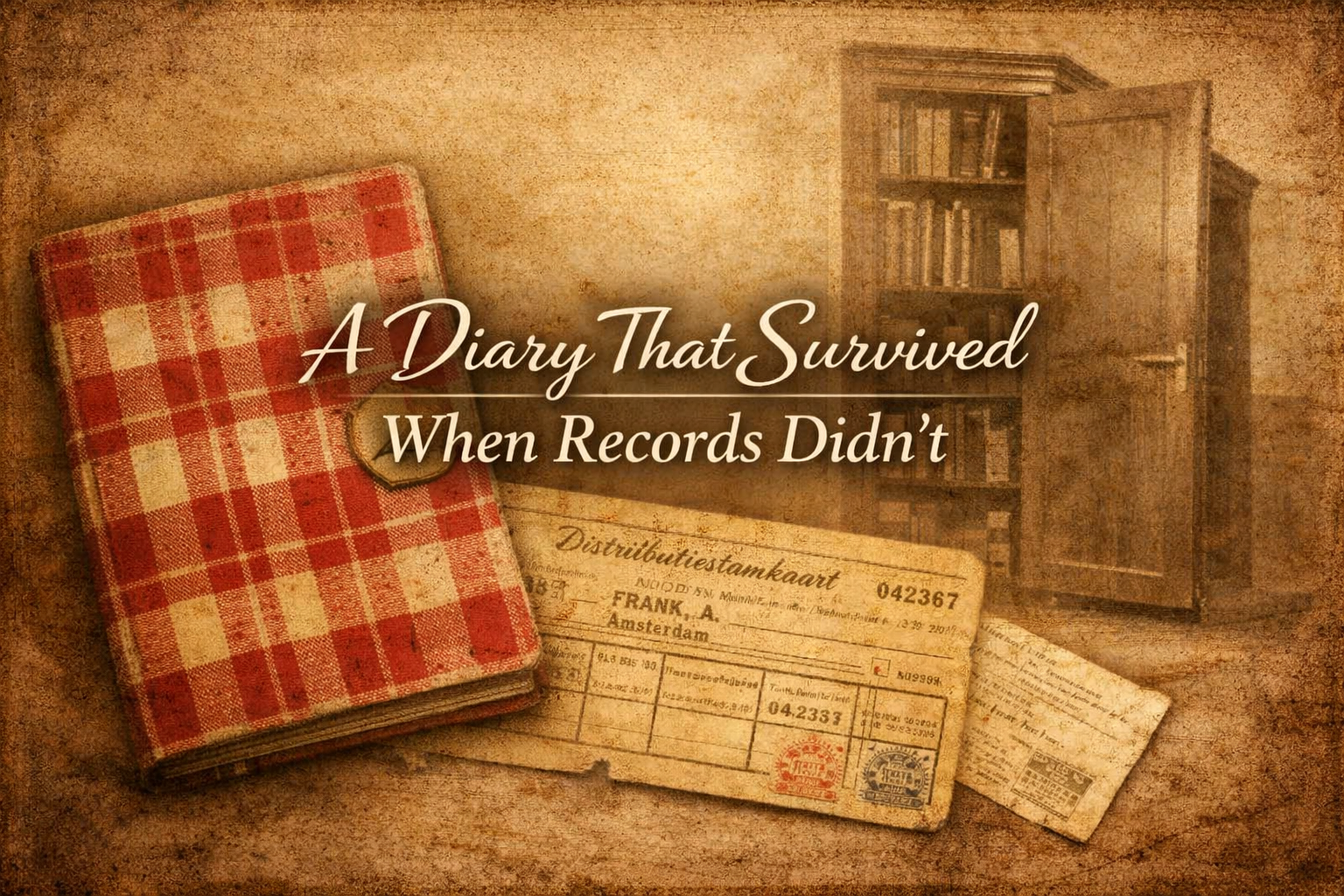
When we look closer, her diary becomes more than a historical document; it becomes a reminder of how family stories survive even when official records do not.
When a Diary Becomes More Than a Diary
Family history has a way of appearing in unexpected places.
Sometimes it’s a census record. Sometimes it’s a photograph. And sometimes… it’s a diary written during one of the most difficult periods in modern history.
At first glance, the diary of Anne Frank belongs to world history.
But when you read it more closely, something familiar begins to appear — a way of thinking about identity, connection, and history itself. In many ways, her writing mirrors the questions we explore when looking into Anne Frank’s family history and the wider stories of our own ancestors.
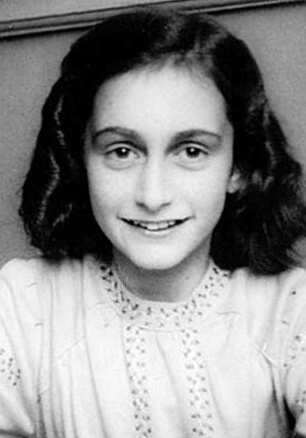
Sometimes genealogy begins long before we know what to call it.
A Life Written in Real Time
Anne Frank was a young Jewish girl living in hiding in Amsterdam during the Second World War.
Her diary is not a retrospective account — it is a life being recorded as it happens.
Within it, she writes about her family, her thoughts, and her growing curiosity about the world.
What stands out is how she tries to understand people — how they connect, behave, and exist within history. This instinct to observe and understand echoes the heart of exploring Anne Frank’s family history and the stories of countless others affected by the war.

Curiosity About History and Connection
In her diary, Anne describes her fascination with history, biographies, and royal families.
For anyone who has built a family tree, this feels familiar — one name leading to another, one story opening into another.
That same instinct drives genealogy today: the desire to understand where we come from, and how the past shapes the present. Anne Frank’s family history is just one example of how personal stories can illuminate wider historical events.
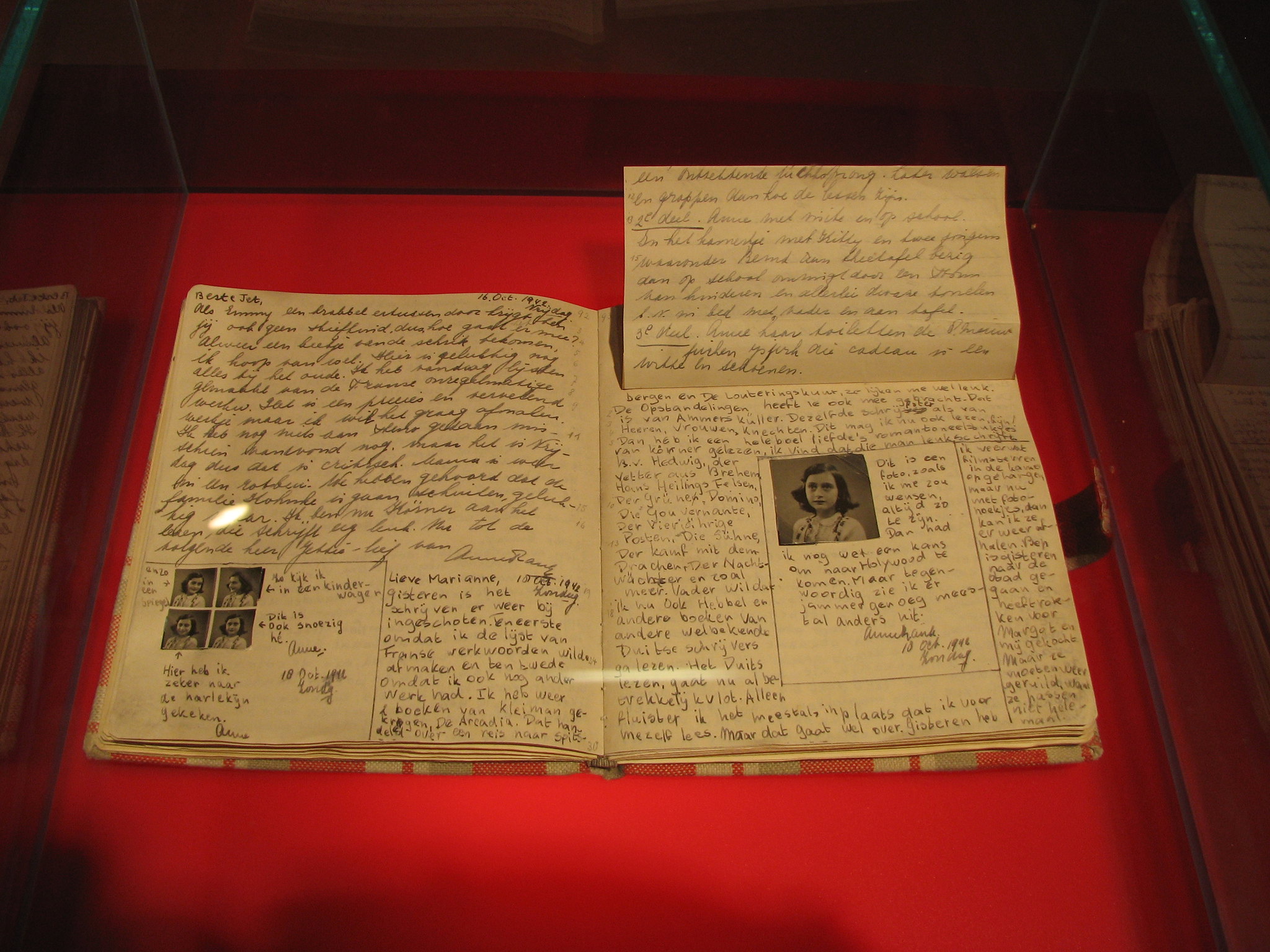
Identity, Records, and What Gets Lost
Genealogy depends on records surviving — births, marriages, censuses, photographs.
The Second World War disrupted and destroyed countless family histories across Europe.
And yet Anne Frank’s diary survives.
Not as a family tree — but as something just as powerful: a preserved voice from a generation whose records were so often interrupted.
Exploring Anne Frank’s family history reminds us how fragile records can be, and how powerful a single surviving voice truly is. Her diary stands in place of the documents that were lost, offering a rare glimpse into a life lived during unimaginable circumstances.
Why Anne Frank’s Family History Still Matters Today
Modern genealogy uses DNA, archives, and digitised records to rebuild the past.
But the question remains the same:
Who are we, and how do we fit into the wider story of those who came before us?
Anne Frank’s family history offers a reminder that even when official records disappear, personal stories can survive in unexpected forms. Her diary captures the emotions, relationships, and reflections that traditional documents often miss.
For family historians, this is a powerful lesson: sometimes the most meaningful records are the ones written in the margins of history.
How This Fits Into My Genealogy Series
This story sits alongside others in my genealogy series:
- From a London Draper’s Son to Lord Mayor
- 1911 Census: When Our Ancestors Let Their Personalities Show
- Are You Royal?
- A Titanic Steward in My Family Tree
- The Search For Shirley
A Final Thought
Genealogy often begins with curiosity, not structure. Sometimes it begins long before we know what to call it.
Looking at Anne Frank’s diary through the lens of family history reminds us why we search in the first place. Every family historian knows the feeling of finding a letter, a note, or a small detail that suddenly brings an ancestor to life.
Her writing offers that same spark — a moment where the past becomes human again. Her reflections, observations, and questions mirror the very heart of genealogy: the desire to understand who people were, how they lived, and how their stories connect to our own.
Her diary may not be a family tree, but it offers insights that echo through Anne Frank’s family history and modern genealogy alike.
Similar Posts
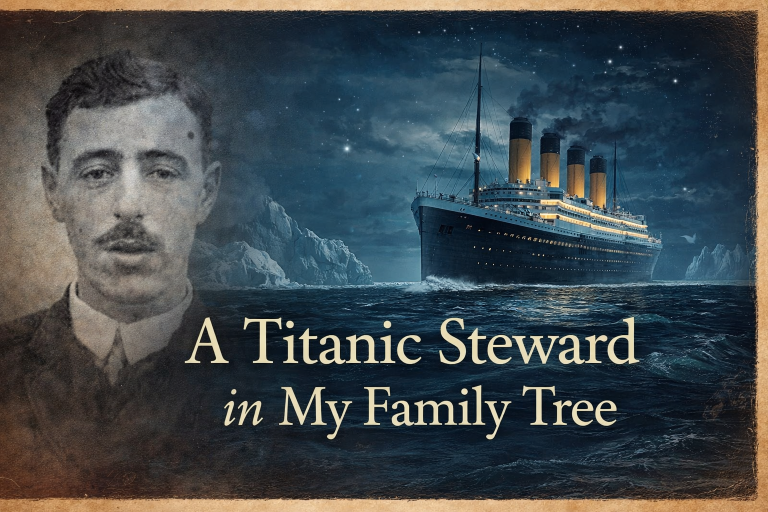
A Titanic Steward in My Family Tree
The story of James William Kieran Discovering a Titanic Connection While researching my family tree, I uncovered an unexpected connection to one of history’s most famous disasters. A relative of mine was aboard the RMS Titanic — not as a passenger, but as one of the crew responsible for the welfare of hundreds of emigrants…
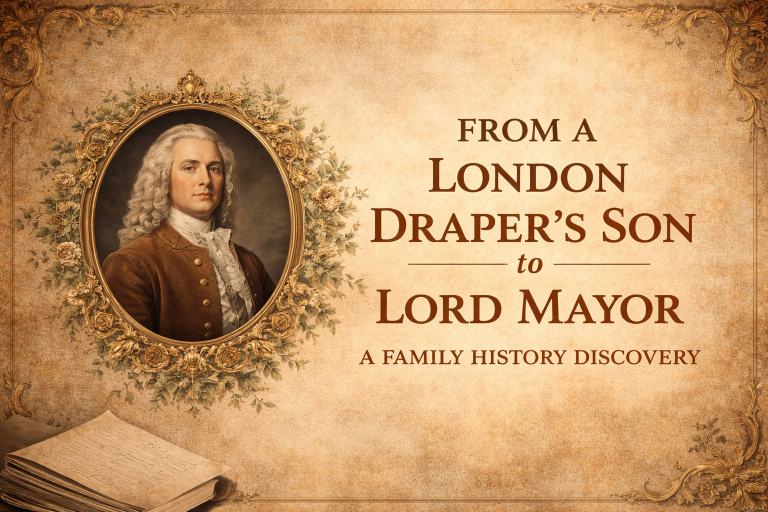
From a London Draper’s Son to Lord Mayor
From a London Draper’s Son to Lord Mayor An Unexpected Beginning One of the biggest misconceptions about family history is that it belongs to “other people” — grand families, famous names, stories already written in history books. Not ours. Most of us expect to find ordinary lives in our trees: quiet ones, people who worked…