1911 Census: When Our Ancestors Let Their Personalities Show
Census records are usually thought of as serious historical documents — neat rows of names, ages and occupations recorded for government statistics.
But the 1911 Census of England and Wales occasionally reveals something far more entertaining.
For the first time in British history, householders were required to fill in the census forms themselves rather than having them copied out by an enumerator. That small change captured something far more valuable than simple statistics — our ancestors’ personalities.
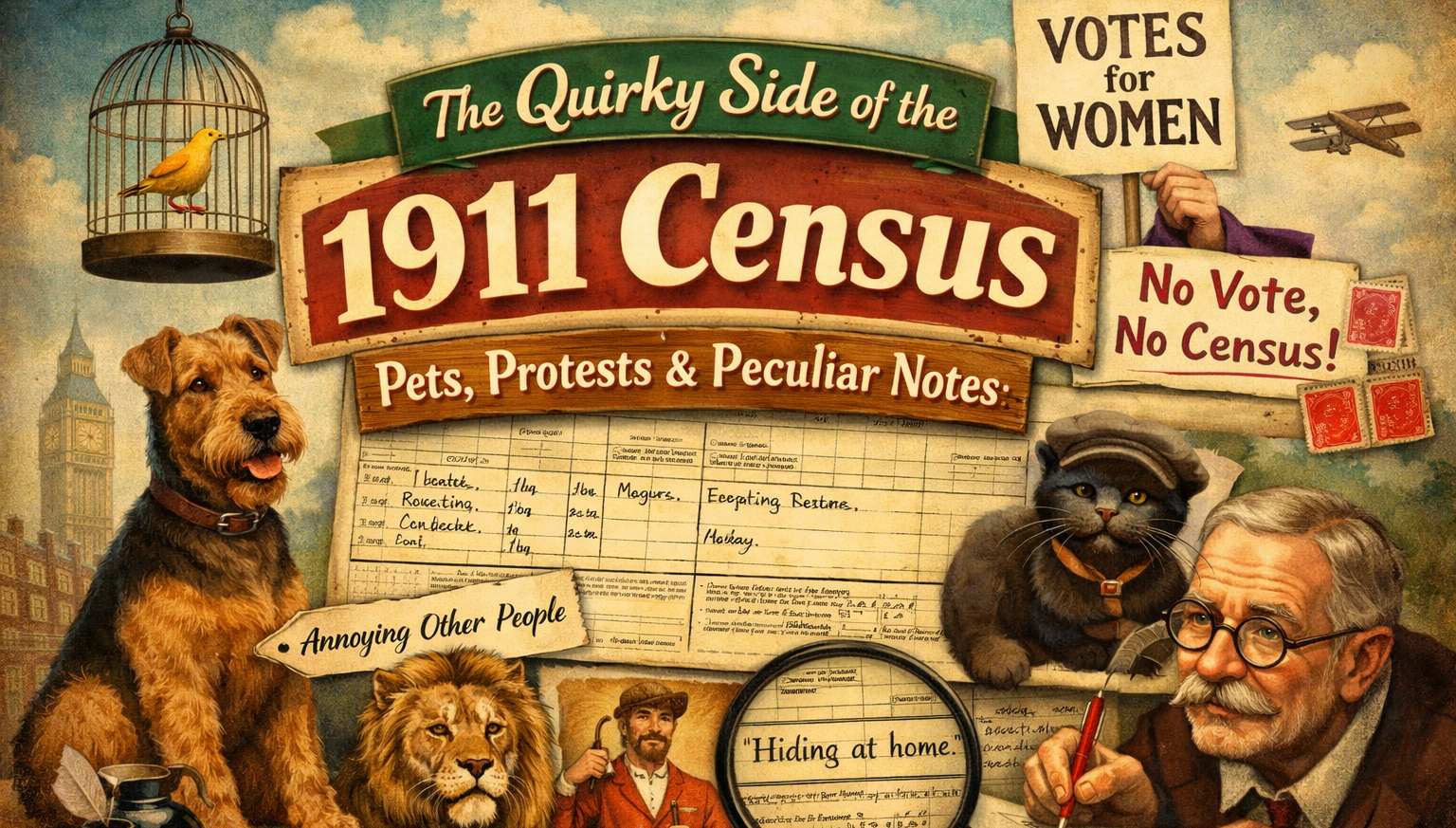
Hidden among the pages are witty remarks, political protests, sarcastic occupations and even the occasional family pet listed as a working professional.
While researching family trees, genealogists like myself sometimes stumble across entries that are funny, rebellious, or wonderfully honest. Here are a few of the most memorable examples.
When the Family Dog Appeared in the Census
Britain is often described as a nation of animal lovers, and it seems that was just as true in Edwardian times.
While browsing the 1911 census you may occasionally come across an individual whose details seem a little suspicious. In some cases this is because the “person” listed was actually a beloved pet.
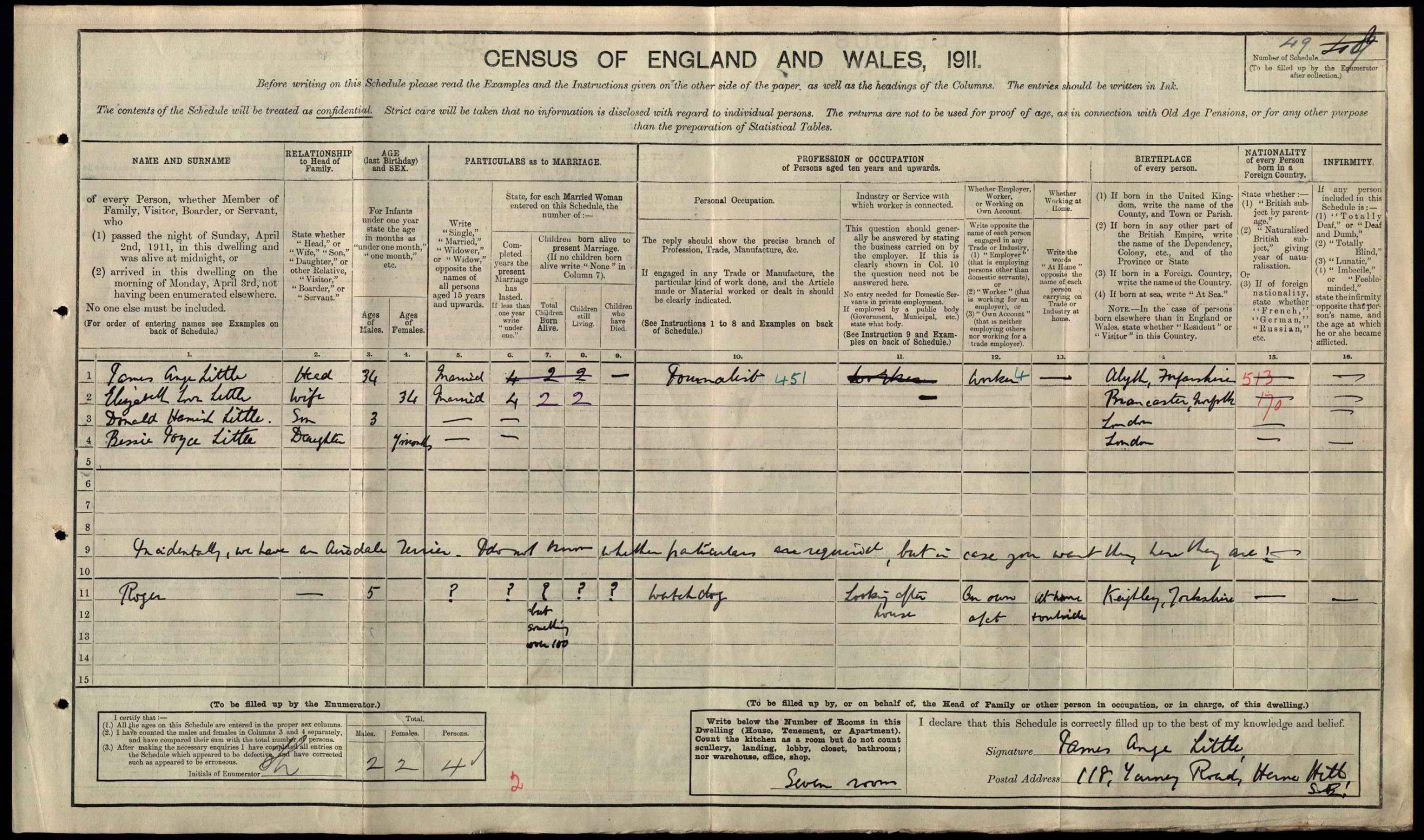
One famous example is Roger the Airedale Terrier, who lived with the Little family in Dulwich, London. The head of the household, James Little, clearly felt Roger deserved his place on the census return.
Incidentally, we have an Airedale Terrier. I do not know whether particulars are required, but in case you want them here they are!”
Roger was recorded as being five years old, born in Keighley, Yorkshire, and working as a “watchdog, employed on own account” in the industry of “looking after house.”
Cats With Careers
Dogs were not the only animals included in census returns.
The Ladbrook family of Bramford Road in Ipswich listed their cat Bob as a household member. Bob was described as:
- Age: 1
- Birthplace: “A stable in Ipswich”
- Occupation: Nomad
- Industry: Mice hunting
- Workplace: Mostly from home
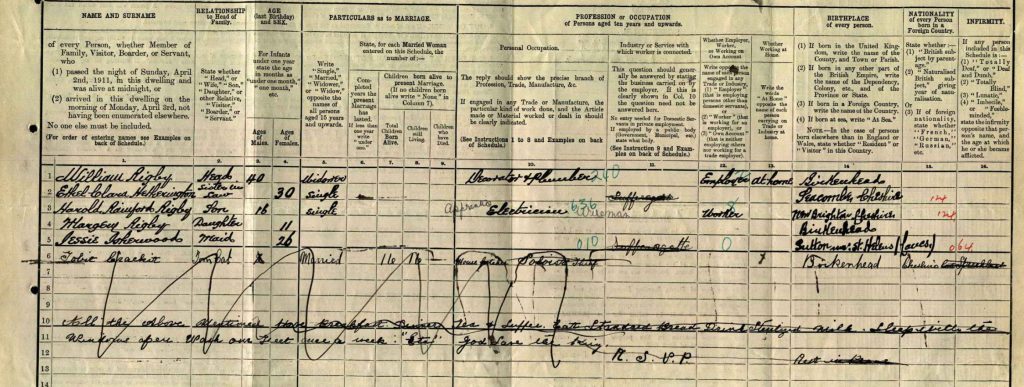
Another feline census entry came from the Rigby family in Birkenhead, who included Tom Cat on their return.
The tom cat was described as:
- Age: 8
- Occupation: Mouse Catcher, Soloist and Thief
- Marital status: Married
- Children: 16
- Birthplace: Cheshire
Under the infirmity column, the head of the household thoughtfully recorded that Tom was “speechless.”
The form went even further, including a note stating:
“All the above mentioned have Breakfast, Dinner, Tea and Supper. Eat Standard bread Drink sterilized milk. Sleep with the windows open. Wash our Feet once a week etc. God Save the King RSVP.”
Unsurprisingly, an exasperated census enumerator eventually crossed the entire entry out.
Suffragettes and the Census Boycott
Not all unusual census entries were humorous. Some reflected the political struggles of the time.
Supporters of the Women’s Social and Political Union, led by Emmeline Pankhurst, organised a boycott of the census with the slogan:
“If women don’t count, neither shall they be counted.”
One remarkable return contained no household information at all. Instead, a large “Votes for Women” flyer had been pasted onto the form along with the slogan:
“No persons here, only women.”
Stamps advertising a suffrage meeting the previous evening were also attached, while an enumerator later attempted to fill in the missing details in green ink.
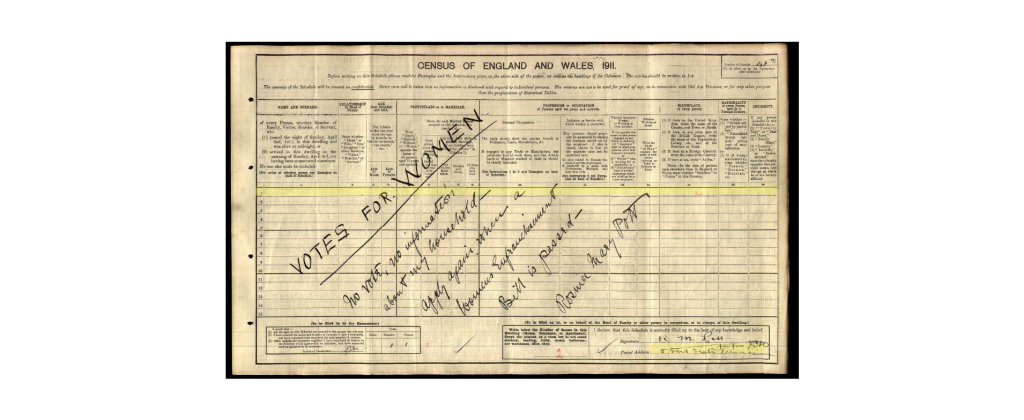
Another suffragette, Rosina Mary Pott, made her protest very clear when she wrote:
VOTES FOR WOMEN. No vote, no information about my household – apply again when Women’s Enfranchisement Bill is passed.“
Not everyone in each household agreed with the boycott. In one case, company director Arthur Edward Maund attempted to correct his wife’s sabotage, writing in red ink:
Unfortunately, my wife being a suffragette put her pen through her name… A silly suffragette to defeat the object of the census, to which as head of the household I object.“
It seems likely that someone may of spent the night on the sofa after that entry.
Brutally Honest Descriptions
Some census entries are memorable simply because of their honesty.
John Underwood of Hastings provided particularly colourful descriptions of his household, listing his children as:
- quarrelsome
- stubborn
- greedy
- vain
- noisy
He described himself as “bad-tempered”, while his wife was said to suffer from a “long tongue.”
Family life clearly had its challenges in the Underwood household.
Unusual Occupations
The occupation column also produced some wonderfully unexpected answers.
One mother listed her 19-year-old daughter Catherine’s occupation as:
“Hiding at home.”
Another grandmother described the job of her two-year-old granddaughter simply as:
“Annoying other people.”
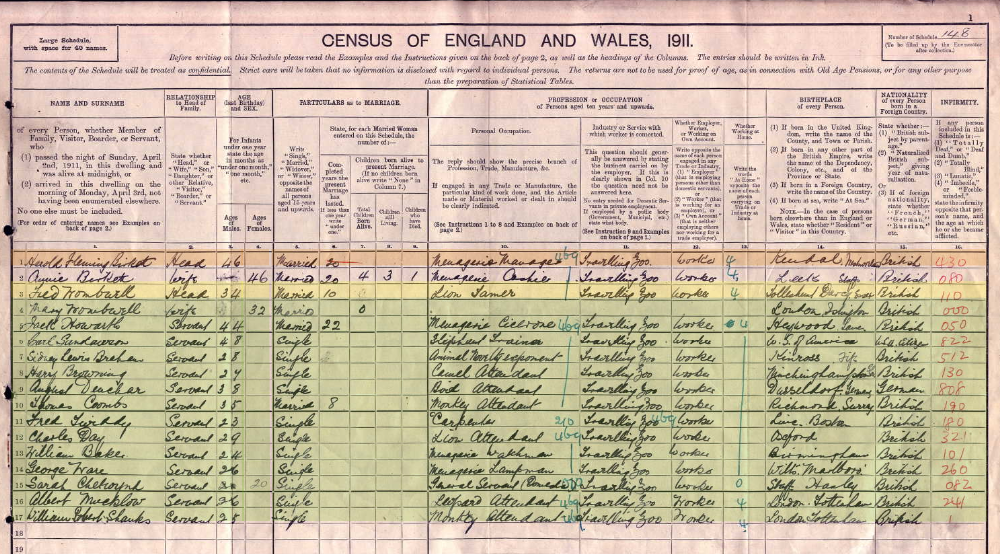
Meanwhile, the census also captured some genuinely fascinating professions. Members of a travelling animal show run by lion tamer Fred Wombwell recorded occupations including:
- lion tamer
- leopard attendant
- monkey attendant
- elephant trainer
These entries provide a fascinating glimpse into the unusual careers that existed in Edwardian Britain.
A Census Full of Character
The 1911 census remains one of the most fascinating records available to family historians. Because the forms were filled in by the householders themselves, they sometimes reveal humour, frustration, political protest, and personality in a way that earlier censuses rarely do.
For genealogists, these moments are a reminder that the people we research were not just names and dates on a family tree — they were individuals with opinions, humour and stories of their own.
And occasionally, they even included the family cat.
These unusual census entries are wonderful reminders that historical records can contain far more than just dates and places.
If you’d like help uncovering the stories hidden in your own family tree, feel free to explore the research services I offer here at The Tree Genie.
You might also enjoy reading: