Are You Royal?
Could Your Family Tree Lead Back to Kings and Queens
It’s a question that fascinates many people when they begin exploring their family history: could I be related to royalty?
It might sound unlikely, but surprisingly, the answer for many people is yes — in a very distant sense. As family trees expand further back through the centuries, the chances of sharing ancestors with noble or royal families increase dramatically.
In fact, researchers suggest that if you go back far enough, most people with European ancestry may share some genealogical connection to medieval royalty (BBC Future).
But what does that actually mean?
When a Carpenter Helped Identify a King
One of the most remarkable modern genealogy stories involves Michael Ibsen, a carpenter living in London.
In 2004, historians contacted his mother, Joy Ibsen, who had spent years researching her family history. They had discovered that she was a descendant of Richard III, the last Plantagenet king of England.
Years later, when archaeologists discovered remains beneath a car park in Leicester believed to belong to Richard III, scientists needed DNA to confirm the identity.
Michael Ibsen provided it.
The BBC reported that a DNA sample from Ibsen helped confirm the king’s identity, linking the skeleton to the royal family line through an unbroken maternal line.
Reflecting on the discovery, Ibsen said:
“We had no idea that we would be part of the process of finding Richard III’s remains.”
It was an extraordinary example of how genealogy, historical records, and DNA science can combine to solve historical mysteries.
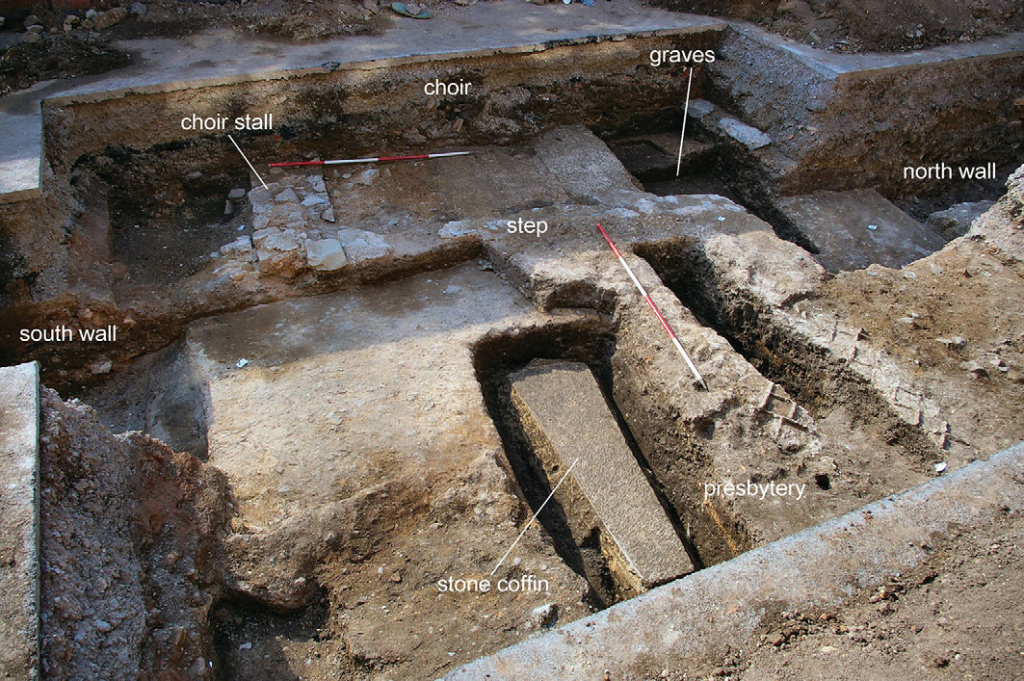
Richard Buckley, Mathew Morris, Jo Appleby, Turi King, Deirdre O’Sullivan, Lin Foxhall, CC BY 4.0, via Wikimedia Commons
Why Royal Connections Are More Common Than You Think
One reason royal ancestry appears more often than people expect is the rapid expansion of family trees through the generations.
Each generation doubles the number of ancestors you have.
- 2 parents
- 4 grandparents
- 8 great-grandparents
- 16 great-great grandparents
After just 25 generations, you could theoretically have over 33 million ancestors.
As populations were much smaller in the past, family trees begin to overlap significantly.
According to evolutionary biologist Graham Coop, this leads to a surprising conclusion. As he explained in a BBC Future. article:
“Your family tree expands so quickly through the generations that you are actually descended from nearly everyone who ever lived who left descendants.”
This means that if you go back far enough in time, many people alive today are distantly related to the same historical figures.
The Famous Example of Charlemagne
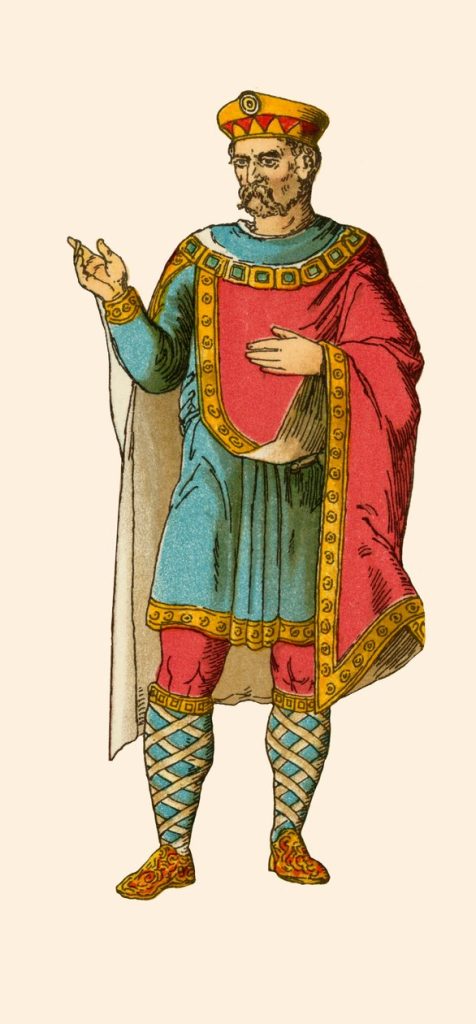
A well-known example often mentioned in discussions of royal ancestry is Charlemagne, the ruler who united much of Europe during the early medieval period.
He lived between 747 and 814 AD and is believed to have had at least 18 children. Over the centuries, his descendants married into countless noble and ordinary families across Europe.
Because of this, historians and genealogists frequently suggest that a large proportion of people with European ancestry today may descend from Charlemagne in some way. As generations passed, the descendants of royal families gradually spread throughout the wider population.
This means that while the connection may be extremely distant, Charlemagne is often described as one of the most likely historical figures to appear somewhere in the family trees of modern Europeans.
However, this doesn’t necessarily mean that those descendants have inherited his DNA.
Genealogical Ancestors vs DNA
This is where things become more complicated.
Being a genealogical descendant (someone in your family tree) is very different from sharing genetic DNA with that person.
Geneticist Shai Carmi (BBC Future) explains that beyond about six generations, the amount of DNA inherited from an ancestor becomes extremely small.
As he notes:
“Being a genealogical relative is very different from sharing DNA.”
In other words, you might be able to trace a line back to a royal ancestor on paper, but there’s a strong chance that none of their genetic material remains in your DNA today.
Gateway Ancestors: The Key to Royal Links
In genealogy, researchers often look for what are known as “gateway ancestors.”
These are members of noble or aristocratic families who eventually married into ordinary families, allowing royal lines to spread into the wider population.
Once a gateway ancestor is identified, it can sometimes provide a documented connection to earlier noble or royal families.
However, proving these links requires careful research using reliable historical records.
What Genealogy Really Reveals
While the idea of royal ancestry captures the imagination, most people researching their family history discover something even more valuable: the real stories of the people who came before them.
Farmers, sailors, craftsmen, miners, soldiers, and mothers raising families through difficult times — these are the people who shaped our family histories.
Every family tree tells a unique story.
And sometimes, hidden within that story, there may even be a surprising connection to the distant past.
Discovering Your Own Family Story
Tracing a family tree can be both fascinating and challenging, especially when research reaches further back into historical records.
Professional genealogy research can help uncover records, confirm family connections, and bring family history to life.
Whether your ancestors were ordinary people or connected to noble families, every family tree holds stories waiting to be discovered.
Every family tree holds unexpected stories.
If you’re curious about what might be hidden in your own ancestry, professional genealogy research can help uncover the records and connections that bring your family history to life.
You might also enjoy reading:
- A Titanic Steward in My Family Tree
- The Search For Shirley
- 1911 Census: When Our Ancestors Let Their Personalities Show
Sources:
This article references information originally discussed in a BBC Future article on royal ancestry and genealogy research.