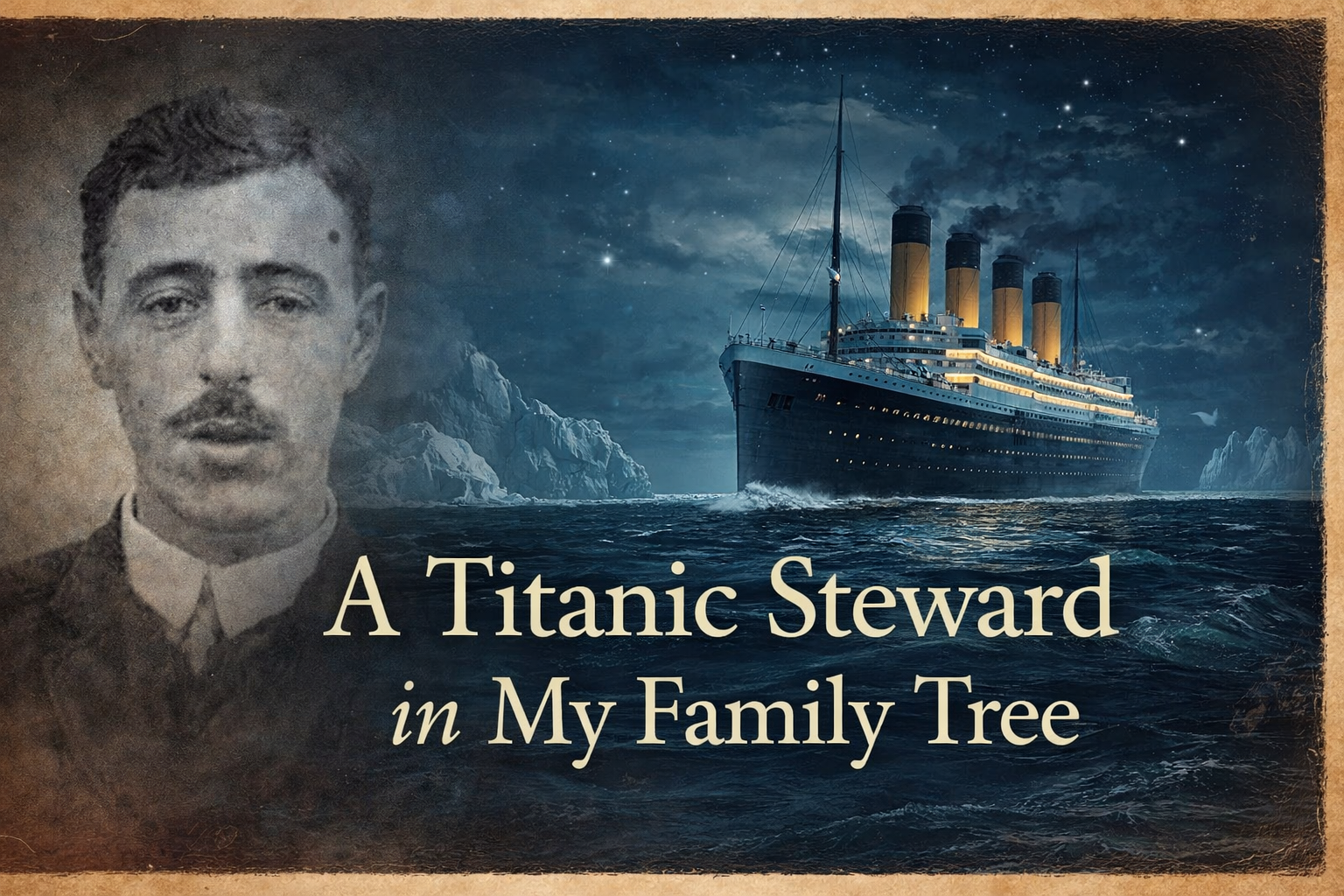
The story of James William Kieran
Discovering a Titanic Connection
While researching my family tree, I uncovered an unexpected connection to one of history’s most famous disasters.
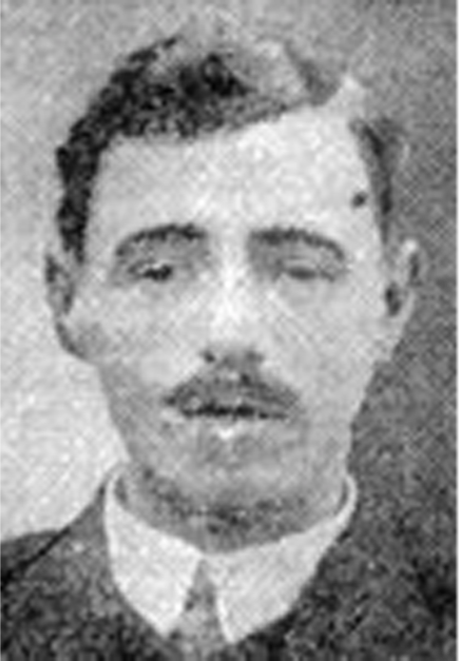
A relative of mine was aboard the RMS Titanic — not as a passenger, but as one of the crew responsible for the welfare of hundreds of emigrants travelling in third class.
His name was James William Kieran, and the fragments of evidence that survive suggest he spent the final hours of the ship helping others escape the great liner that sank in the North Atlantic on 15 April 1912.
Although the Titanic story is often told through the experiences of wealthy passengers or senior officers, men like Kieran were essential to the running of the ship — and played a critical role during its final hours.
Joining the Ship
On 4 April 1912, Kieran signed on to Titanic in Southampton.
He gave his address as Inglewood, Bellemoor Road, and had recently been transferred from Titanic’s sister ship, the RMS Olympic.
As Chief Steward for Third Class, he earned £8 per month working for the prestigious White Star Line.
The position carried significant responsibility. Titanic carried hundreds of third-class passengers, many emigrating to America in search of a new life. Managing their accommodation and welfare required a team of stewards, all working under Kieran’s direction.
One of those men was Samuel Sidney Sedunary.
Sidney was just 25 years old, recently married, and expecting his first child. Despite his youth, he already had eight years of experience at sea, beginning when he joined the Royal Navy at age seventeen.
By April 1912, Sidney was serving as Second Steward in Third Class, effectively acting as Kieran’s assistant.
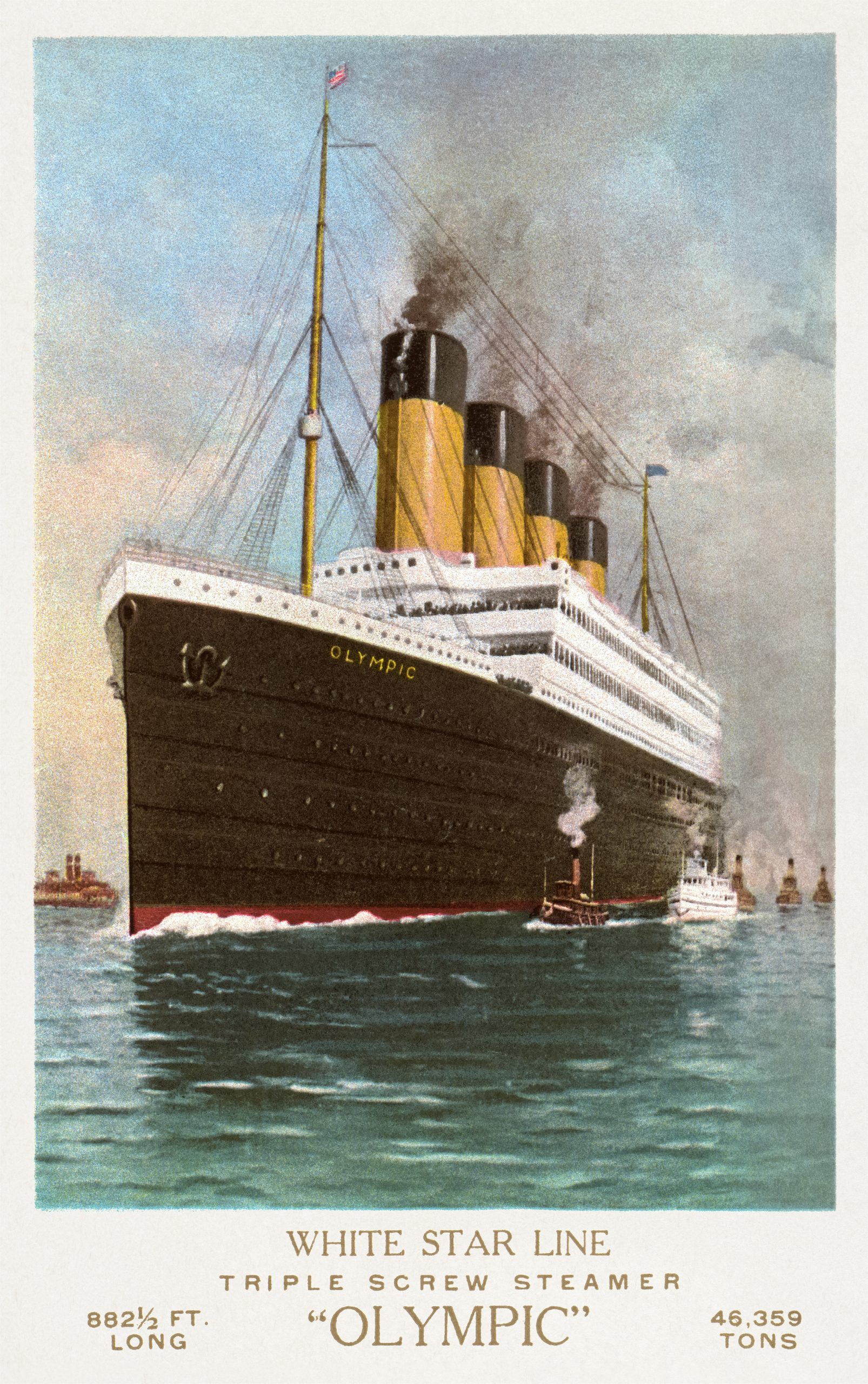
The forgotten sister.
While the Titanic became a legend through tragedy, the Olympic (pictured) was the lead ship that actually fulfilled her promise.
Life and Work Below Deck
As Chief Third Class Steward, James William Kieran was responsible for overseeing the stewards who looked after passengers travelling in third class aboard the RMS Titanic.
Third-class accommodation on Titanic was far more comfortable than on most ships of the era, and the White Star Line proudly advertised it to emigrants travelling to America.
Kieran’s duties would have included:
- supervising the team of third-class stewards
- ensuring cabins and shared spaces were kept in order
- organising meals and assisting passengers in the dining saloons
- helping passengers find their way around the ship
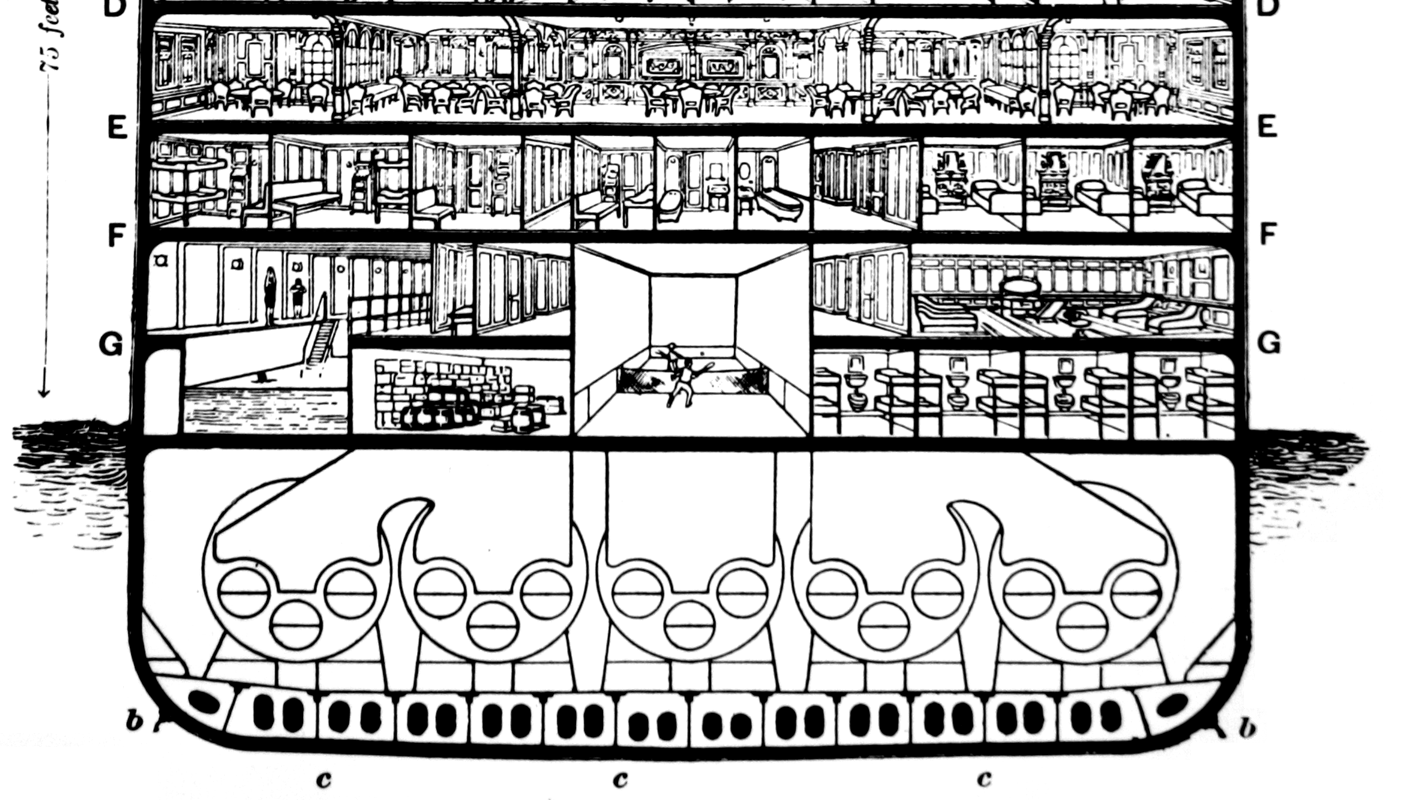
Much of this work took place on the lower passenger decks of the ship — particularly E, F, and G decks.
These decks contained a maze of cabins, communal rooms, service corridors, and stairways used by passengers and crew alike. One of the most important passageways was a long corridor running almost the entire length of the ship, known to the crew as Scotland Road.
Working alongside Kieran was Samuel
Together they were responsible for helping hundreds of passengers navigate daily life aboard one of the largest ships ever built.
The Night of the Disaster
Late on 14 April 1912, Titanic struck an iceberg.
Deep inside the ship, far from the officers on the bridge, the responsibility for organising the third-class passengers fell largely to Kieran and the stewards under his command.
Survivor testimony provides rare glimpses of what happened next.
Kieran immediately began directing his team of stewards. One steward, John Hart, was ordered to distribute lifebelts in Sections K and M, while Kieran himself went to Sections Q, R, and S to ensure passengers there were equipped.
These areas were located across E, F, and G Decks — the very sections of the ship where water was already beginning to enter.
In the Flooding Decks
By the time Kieran was moving between the third-class sections of the ship, the situation below decks was already becoming dangerous.
Water had begun entering G Deck by around 11:55 pm. Within minutes it was spreading upward through parts of F Deck and then into sections of E Deck. Along the length of the ship ran the corridor the crew called Scotland Road, a passageway that connected many of the third-class areas and service spaces.
As the ship’s bow slowly settled lower in the water, cold seawater began creeping through these compartments.
For the stewards working there, the conditions must have been chaotic — passengers waking suddenly, language barriers, confusion, and the growing realisation that the ship was in serious trouble.
Kieran’s responsibility was not just to help individuals, but to coordinate the stewards responsible for hundreds of third-class passengers. Orders had to be passed along quickly: lifebelts distributed, cabins checked, and groups of passengers guided upward through the maze of corridors and stairways toward the boat deck.
Working beside him was Samuel, relaying Kieran’s instructions to other stewards and helping distribute lifebelts.
It meant that while many passengers were slowly making their way toward the lifeboats above, Kieran and his assistant were likely moving repeatedly through the very decks where the water was first entering the ship.
A Moment in Time
14 April 1912 – 11:40 pm
Iceberg Strikes Titanic: The RMS Titanic strikes an iceberg in the North Atlantic.
14 April 1912 – 11:55 pm
Flooding Begins: Water floods parts of G Deck, where some third-class areas were located.
Around Midnight
Crew Organises Lifebelts: Crew members, including James William Kieran, start organising lifebelts and directing stewards to assist passengers.
15 April 1912 – 12:05–12:10 am
Water Spreads: Water spreads into forward sections of F Deck and E Deck, where many third-class passengers and crew were located.
15 April 1912 – 12:30 am
Stewards Escort Passengers: Stewards begin escorting groups toward the boat deck where lifeboats are being prepared.
15 April 1912 – 2:20 am
Titanic Sinks: The Titanic sinks. Over 1,500 passengers and crew lose their lives.
Duty in the Depths of the Ship
Because Sidney worked closely with Kieran — relaying instructions and assisting other stewards — he likely moved constantly between the forward and aft sections of these decks.
That means both men were operating in the lowest passenger areas of the ship as the water was rising.
While some stewards were leading groups of passengers toward the lifeboats, Kieran remained responsible for directing the overall effort across multiple sections.
Testimony also suggests that he was actively helping passengers himself.
One survivor later recalled that Kieran gave away one of his own lifebelts.
He also ordered the greasers and firemen to get lifebelts in the Third Class quarters, He sacrificed his one of his own life belts, to save others”.
– This piece of information was in the Testimony of mr Scott, a survivor.
Sidney, meanwhile, appears to have spent much of the sinking unlocking cupboards and distributing lifebelts, rather than attempting to reach the lifeboats.
The End of the Voyage
Neither James William Kieran nor his assistant Samuel Sidney Sedunary survived the sinking of the RMS Titanic.
Kieran died during the disaster in the early hours of 15 April 1912. In the days that followed, recovery ships searched the freezing waters of the North Atlantic for victims of the tragedy. Although many bodies were recovered, Kieran’s body — if it was found at all — was never identified.
Sedunary’s body, however, was later recovered. His personal effects were returned to his young widow, Madge, who was just twenty-four years old and expecting their first child.
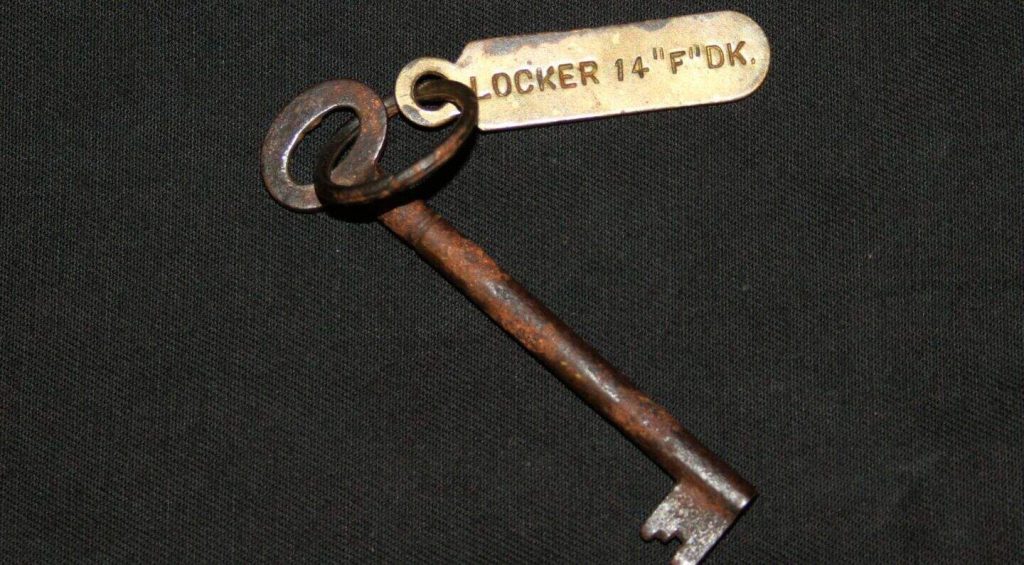
Among the items returned to her were a few coins, a broken pocket watch that had stopped shortly after he entered the freezing water, and a small key with a metal tag reading:
“Locker 14, F Dk.”
At first glance it was an ordinary object — yet it represented the final trace of a man who had spent the last hours of his life distributing lifebelts and helping passengers escape.
Later that same year, Madge gave birth to Sidney’s only child, a son named Sidney after his father.
In 1921, nine years after Sidney’s death, she remarried — to Sidney’s younger brother, Arthur. The couple later had another son together in 1926.
Sidney Sedunary’s son lived a long life, passing away in 2010 at the age of 97, believed to have been the last surviving Titanic orphan.
Six years after his death, the small key recovered from Sidney’s body — the one labelled Locker 14, F Deck — was sold at auction for £85,000, a quiet tribute to a young steward whose courage on the night of the disaster might otherwise have gone unrecorded.
A Final Reflection
When people tell the story of RMS Titanic, they often focus on its famous passengers — the millionaires, the socialites, and the dramatic survival stories that captured headlines around the world.
But the ship was also crewed by hundreds of working men like James William Kieran — men whose final hours were spent helping others find lifebelts, guiding passengers through unfamiliar corridors, and carrying out their duties as the ship slowly disappeared beneath the North Atlantic.
Many of these crew members left behind little more than a name in the official records of the disaster.
Discovering Kieran in my extended family tree was a powerful reminder that sometimes the stories behind great historical events are closer to home than we realise.
Behind every name in a record lies a life, a family, and sometimes a remarkable act of quiet courage.
More than a century later, the story of James William Kieran is a reminder that history is not only made by the famous — but also by ordinary people whose courage quietly shaped the events of their time.
Interested in discovering stories hidden in your own family tree?
You can explore my research packages or get in touch to start your own journey of discovery.
You might also enjoy reading: